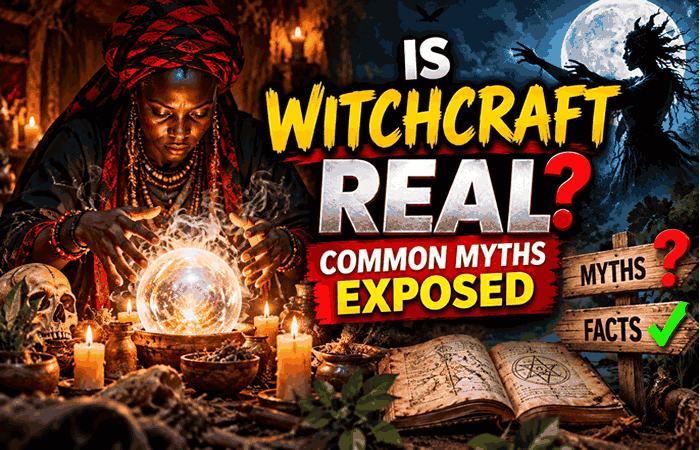
Few subjects inspire as much fascination, fear and confusion as witchcraft. For some people, the word conjures images of pointed hats and cauldrons. For others, it brings to mind dark rituals and curses. Still others see it as harmless fiction. The reality is far more interesting, and far more human.
In this article, Queen Latibu explores what witchcraft really is, where the myths came from and how genuine spiritual practice works today.
What do we mean by witchcraft?
"Witchcraft" is a broad word that has meant different things in different times and places. Generally, it refers to the practice of magic: using rituals, natural materials, words and intention to influence events or energies. Under this broad definition, many traditions around the world include practices that could be called witchcraft, from European folk magic to modern Wicca and many forms of traditional healing.
In Africa, the word is complicated. In some communities, "witchcraft" specifically means harmful magic, while traditional healers who help people are given entirely different names and great respect. This is an important distinction: healers often work to protect people from harmful witchcraft rather than practise it.
So, is witchcraft real?
Witchcraft is undeniably real as a human practice. Millions of people around the world practise some form of magic, folk healing or spiritual ritual today. Whether its effects are spiritual, psychological or a mixture of both is a question people answer according to their own beliefs and experiences. Many who practise or consult healers report meaningful changes in their lives: clarity, healing, protection and renewed hope.
Myth 1: All witchcraft is evil
Most magical and healing traditions focus on positive goals: health, love, protection, prosperity and harmony. Harmful magic exists, as does harm in every area of human life, but it is not what most practitioners do. Traditional healers in Africa are often the very people communities turn to for protection from harm.
Myth 2: Witches worship the devil
This idea grew largely from European witch trials of the fifteenth to seventeenth centuries, when thousands of people, mostly women, were accused and executed. Modern historians recognise that most of the accused were ordinary people, often healers, midwives or outsiders. The devil-worship story was largely an invention of their accusers.
Myth 3: Spells can do anything instantly
Films show spells producing instant, dramatic effects. Real spiritual work tends to be gradual and subtle. It works with energy, people and circumstances, and it respects free will. Anyone who promises instant miracles should be approached with caution.
Myth 4: Only certain people can practise magic
Many traditions believe that some people are called to become healers and receive years of training. At the same time, simple rituals of intention, gratitude and protection are open to everyone. You can find examples in free spells that work.
Myth 5: Magic is just superstition
Dismissing magic as superstition overlooks its deep cultural, historical and emotional significance. Traditional healing systems contain sophisticated knowledge of plants, community dynamics and human psychology. Ritual helps people process grief, find courage and create meaning. Whatever one believes about its spiritual mechanisms, its value to people is real.
Myth 6: Using a spell caster is dangerous
Working with an ethical, experienced healer is safe. The real dangers come from scammers who exploit people, and from practitioners who use harmful methods. Learn to recognise the difference in real spell casters vs the rest.
Myth 7: Voodoo is black magic
Voodoo is a living religion with roots in West Africa, not a synonym for evil. Its reputation was shaped by fiction and fear. Read more in is voodoo real?.
Myth 8: Witchcraft is a thing of the past
Spiritual practice is thriving today. Traditional healing remains central in many African communities, Wicca and modern paganism have grown worldwide and more people than ever are exploring meditation, ritual and energy work.
Myth 9: You must give up your religion to use spiritual help
Many people who consult traditional healers also follow Christianity, Islam or other faiths. In Africa especially, it is common for people to attend church or mosque and also seek the guidance of a healer for matters such as health, family and ancestral concerns. Traditional healing often focuses on prayer, gratitude, ancestors and natural remedies, which many people find compatible with their wider faith. Queen Latibu respects every client's beliefs and never asks anyone to abandon their religion.
Witchcraft accusations and harm
It is important to acknowledge a painful reality: in some parts of the world, accusations of witchcraft still lead to violence against vulnerable people, including the elderly and children. Ethical healers and human rights groups work to end this harm. Respecting spiritual traditions must always go hand in hand with protecting people's safety and dignity.
What genuine spiritual practice looks like
- it begins with listening and understanding;
- it uses natural materials and prayers with respect;
- it aims to heal, protect and restore balance;
- it respects free will and avoids harm;
- it is honest about its limits.
Queen Latibu's practice
Queen Latibu practises traditional African healing passed down through family elders. The work focuses on love, luck, money, protection and spiritual wellbeing, always beginning with a reading and always aiming to help without harm.
Have questions?
If you are curious about spiritual practice or want to understand your situation, contact Queen Latibu for a private consultation. You may also enjoy the truth about Wiccan love spells and powerful African love spells.
Ready to talk about your situation?
Queen Latibu offers private consultations by WhatsApp, phone and email.
Spiritual services are provided according to traditional belief and for personal guidance. Results vary and are not guaranteed. See our disclaimer.