Few words carry as much mystery as "voodoo". Films and television have taught many people to associate it with pins, dolls and curses. In reality, voodoo is a rich spiritual tradition with deep roots in West Africa, and its love magic is far more gentle, meaningful and respectful than its reputation suggests.
This article explains where voodoo comes from, how voodoo love spells work, the truth behind common myths and how to decide whether voodoo love magic is right for you.
The roots of voodoo
Voodoo, also written Vodun or Vodou, began among the peoples of West Africa, particularly in the region that is now Benin and Togo. It is a spiritual system centred on a supreme creator, a community of spirits who oversee different parts of life, and the ancestors who continue to guide their descendants.
When enslaved Africans were taken to the Caribbean and the Americas, they carried these beliefs with them. Over time, the tradition adapted and blended with local influences, giving rise to Haitian Vodou and Louisiana Voodoo. Today voodoo is practised by millions of people and is recognised as an official religion in Benin.
Love in the voodoo tradition
In voodoo, love and relationships are overseen by particular spirits associated with beauty, romance, fertility and devotion. Practitioners make offerings and prayers to these spirits to ask for help with matters of the heart. A voodoo love spell is essentially a respectful request for spiritual assistance, combined with ritual actions that focus intention.
This means voodoo love magic is relational. It depends on a respectful connection between the practitioner, the spirits and the person seeking help.
The truth about voodoo dolls
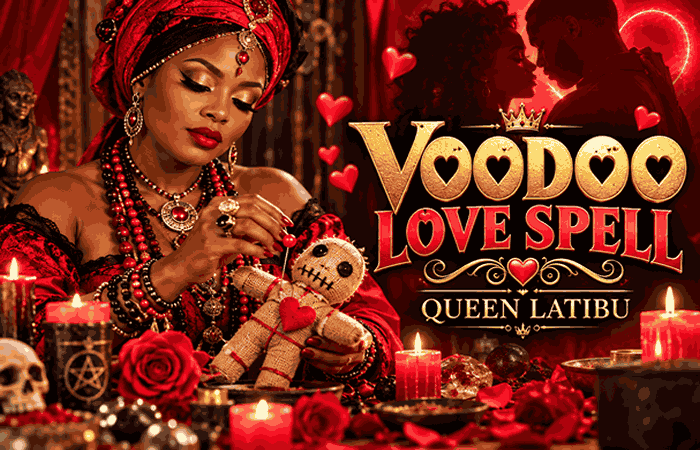
The image of a doll stuck with pins is largely a creation of film and popular fiction. In genuine practice, figures and dolls, where used at all, are more often tools for focusing healing or blessing on a person, for example to represent someone who needs protection or comfort.
A voodoo love spell is far more likely to involve candles, herbs, perfumes, sweet offerings such as honey or sugar, personal items and prayer than anything resembling the movie stereotype.
How a voodoo love spell is performed
While each practitioner works in their own way, a voodoo-inspired love spell commonly includes:
- A reading to understand the relationship and the spiritual forces at work.
- Cleansing to remove negativity and prepare the person and space.
- Offerings to the spirits of love, such as flowers, sweets or perfume.
- The ritual, using candles, herbs and personal items to represent the people involved and the love being called upon.
- Sealing, often with honey or oils, so that the relationship remains sweet.
As with any spiritual work, accurate details about the people involved and a sincere intention are essential.
What voodoo love spells are used for
- bringing back a former partner after a separation;
- encouraging a hesitant partner to commit;
- attracting a new partner;
- restoring harmony and passion in a long-term relationship;
- protecting a relationship from jealousy and interference.
Is voodoo love magic safe?
Voodoo itself is not inherently dark. Like any tradition, it can be used to help or, by some practitioners, to harm. Spells intended to control, punish or bind someone against their will fall into the territory of black magic and carry serious risks for everyone involved.
When voodoo love magic is practised with respect and positive intention, it is a gentle and powerful way to invite love and harmony. The key is choosing a practitioner who works ethically.
Voodoo and African traditional healing
Because voodoo grew from West African roots, it shares much with the broader African healing traditions that Queen Latibu practises: respect for ancestors, the use of natural materials, the importance of offerings and a strong belief that spiritual work should restore balance. Queen Latibu draws on this shared heritage when preparing love spells, adapting the approach to each client's situation.
You can learn more in powerful African love spells.
Choosing a practitioner
If you are considering a voodoo love spell, look for someone who:
- explains their tradition and methods openly;
- performs a reading before recommending any spell;
- refuses to cast spells intended to harm;
- is clear about fees and timelines;
- respects your privacy.
Preparing yourself for a voodoo love spell
In voodoo and African healing traditions, the person seeking help is an active participant, not a passive customer. Before your spell is cast, you may be asked to prepare yourself in simple ways that help align your energy with the work:
- Cleansing. A bath with herbs or salt, or a period of quiet reflection, helps clear away anxiety and heartbreak.
- Intention setting. You will be encouraged to think clearly about what you want, framed in positive terms.
- Small offerings. Some clients choose to light a candle or place flowers in their home as a sign of respect and openness.
- Letting go of anger. Releasing resentment towards your partner or anyone else involved makes room for love to return.
These steps are simple, but they make a real difference. When your own energy is calm and open, the spell can flow through you more easily and reach the person you love with clarity. Queen Latibu will guide you through any preparation that suits your situation during your consultation.
What to expect afterwards
After a voodoo love spell, many people notice a growing sense of calm and confidence, followed by signs of change in their relationship, such as renewed contact, warmer conversations or a partner showing more affection. Change may be gradual. Patience, positivity and keeping the spell private all help it work.
Explore voodoo love magic safely
If you are curious whether a voodoo-inspired love spell could help you, contact Queen Latibu for a private consultation. To learn more about the history and myths of voodoo, read voodoo love spells: is voodoo real?.
Ready to talk about your situation?
Queen Latibu offers private consultations by WhatsApp, phone and email.
Spiritual services are provided according to traditional belief and for personal guidance. Results vary and are not guaranteed. See our disclaimer.